Short answer: no. When the laser is set correctly for the material, it removes the rust, paint or contamination and leaves the metal underneath exactly as it was. That is the whole reason industry moved to laser cleaning for parts that sandblasting, grinding and acid were wearing out.
Why the beam stops at the metal
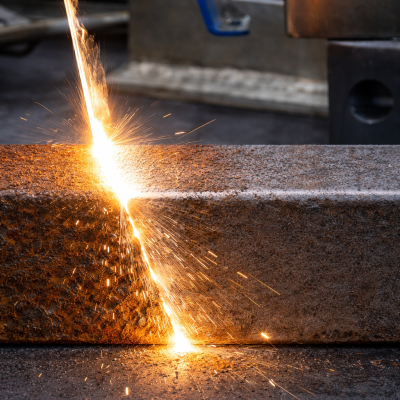
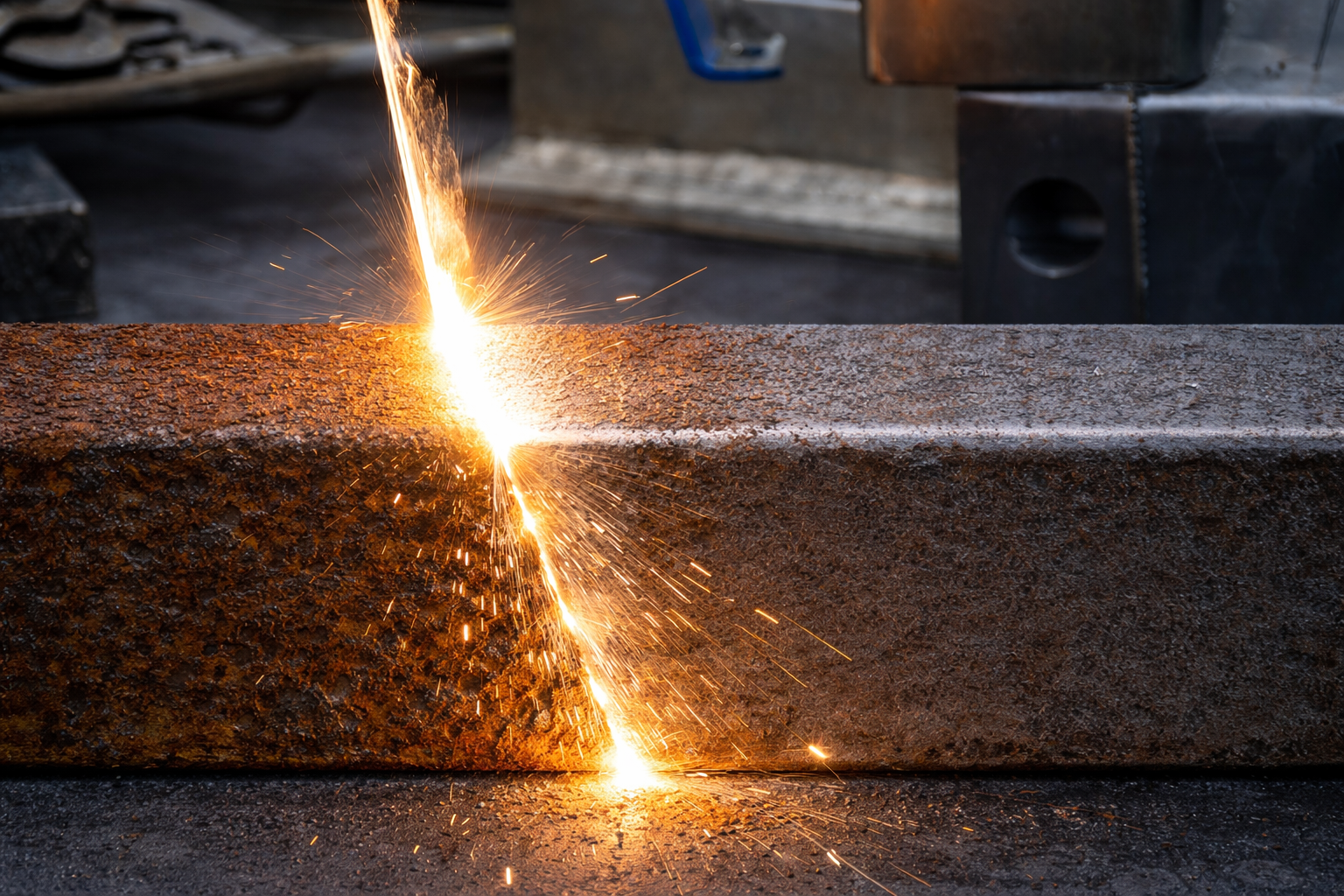
Laser cleaning works on a difference in absorption. Rust, paint, grease and soot are dark and absorb laser energy readily. Clean metal is reflective and absorbs very little. When the beam hits a rusted surface, the oxide layer absorbs the energy, heats almost instantly, and is vaporized or blown off the surface. Once the oxide is gone, the beam is hitting bare metal, which reflects most of the energy back. The process effectively self-limits at the boundary between contaminant and substrate.
That is a simplification, because every material has some absorption and the operator still has to choose the right settings. But it explains the practical result: a rusted flange comes back to clean steel with the machined face, the bolt holes and the gasket surface untouched.
Pulsed versus continuous-wave
The second reason is the type of laser. Gulf South Laser uses a pulsed fiber laser. It delivers its energy in extremely short bursts with high peak power and almost no time between pulses for heat to soak into the part. The surface layer is removed before the metal underneath warms up. A continuous-wave laser, by contrast, delivers steady energy and is built for cutting and welding, where heat is the point. It is the wrong tool for precision cleaning, and it is not what we use.
What about thin metal and aluminum?
Thin sheet, aluminum and machined surfaces are where laser cleaning has the clearest advantage. Blasting erodes aluminum and can push thin panels out of shape. Grinding takes material and leaves heat marks. Laser cleaning removes only the coating or oxidation, so panel thickness, surface finish and tolerances are preserved. We confirm the setting with a test spot on every job, and on thin material that test spot is where we check for any sign of heat before committing to the whole surface.
Where the operator matters
Laser cleaning is not foolproof. Too much power, too slow a pass, or the wrong setting for the material can leave heat tint on stainless or a texture change on soft metals. That is an operator problem, not a technology problem, and it is why the test spot is part of every job we do. You see the result on your own part before we proceed.
The practical upshot
If you have parts, equipment, railings, hardware or structures that you have hesitated to blast because the metal is thin, machined, detailed or historic, laser cleaning is the method that was built for that problem. The metal comes back clean, dry and dimensionally unchanged, and it is ready for inspection, welding or coating as soon as we finish.
Have a part you are not sure about? Send a photo to info@gulfsouthlaser.tech or call (504) 913-0520. We serve Metairie, New Orleans and the surrounding parishes with a mobile unit.
Quick answers
Does laser cleaning damage metal?
No. A pulsed laser set for the material removes rust, paint and contamination while the clean metal underneath reflects the beam. There is no abrasion and very little heat input, so dimensions, threads, weld areas and machined surfaces are preserved.
Can laser cleaning warp thin sheet metal?
A pulsed laser puts far less heat into a part than grinding, torching or a continuous-wave laser. Warping on thin panels is uncommon and is checked with a test spot before full cleaning.
Does laser cleaning work on aluminum?
Yes. Aluminum is a good candidate because it is soft and easily gouged by blasting. Laser cleaning removes coatings and oxidation without eroding the surface.