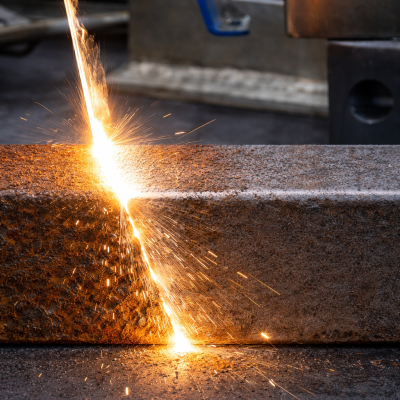
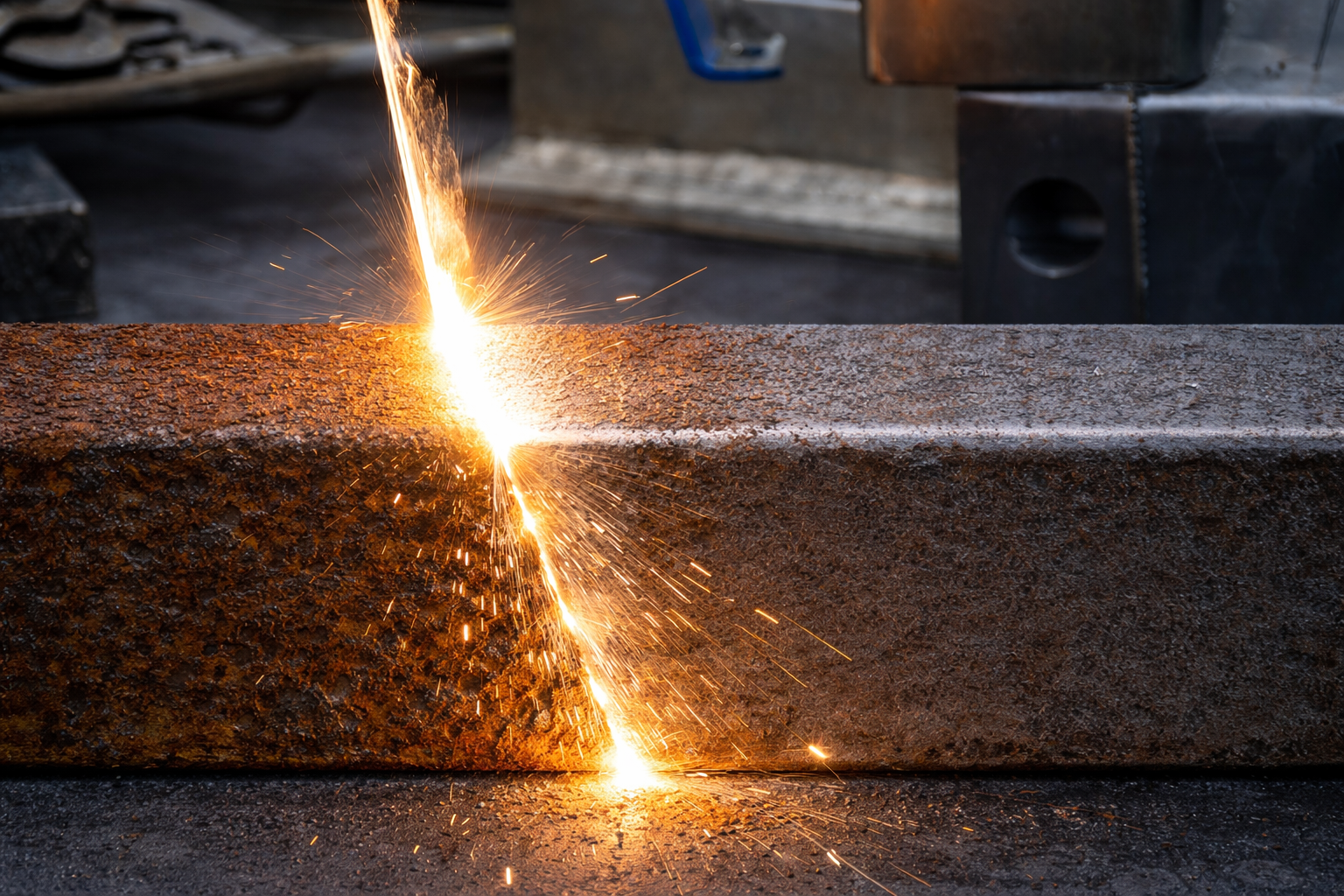
A Class 4 industrial laser deserves respect, and the reason laser cleaning is considered a safer process than blasting or chemical stripping is that the hazards are known, small in area, and controlled. Here is what a job looks like from the moment we arrive.
Setting up the work area
Before the laser is turned on, we agree on a controlled zone around the surface being cleaned. The beam only poses a risk at the point where it is being used and in the immediate line of sight, so the zone is small. Outside it, your shop, kitchen or job site keeps running.
Eye protection
The operator wears laser-rated eye protection matched to the wavelength of the system. Anyone who needs to be inside the controlled zone during the work wears the same protection. Nobody else needs it.
Fume extraction
When the laser removes rust, paint, grease or soot, the material is vaporized into a plume. The extraction unit captures that plume at the nozzle, filters it, and that is where the removed material ends up. This is the piece that makes indoor work possible and replaces the clouds of dust that blasting creates.
What is not there
No sand, grit or slag flying around. No chemical strippers, acids or solvents, and no rinse water carrying them to a drain. No compressed-air hoses under pressure. The two biggest hazards in traditional surface cleaning, airborne particulate and chemical exposure, are simply absent.
Heat and fire
A pulsed laser puts very little heat into the part, which is why it does not warp thin metal. We still look at what is behind and around the surface before we start, especially on wood and in older buildings, and we keep the appropriate equipment on hand.
Your part
Tell us about anything near the work that is sensitive: electronics, fuel, finished surfaces that need masking, people who need access. We plan around it. Questions before a job? Call (504) 913-0520 or email info@gulfsouthlaser.tech.
Quick answers
Is laser cleaning safe to have done at my business?
Yes, when it is done by a trained operator with the right controls. The work area is controlled while the laser is running, the operator wears laser-rated eye protection, and a fume extractor captures what comes off the surface.
Can employees keep working nearby?
Outside the controlled work area, yes. We set up the boundary with you before we start so your operation can keep running around it.
Does laser cleaning create fumes or dust?
It vaporizes the contaminant, and that plume is captured at the point of work by the extraction unit. There is no blast dust and no chemical vapor, which is why it can be used indoors.